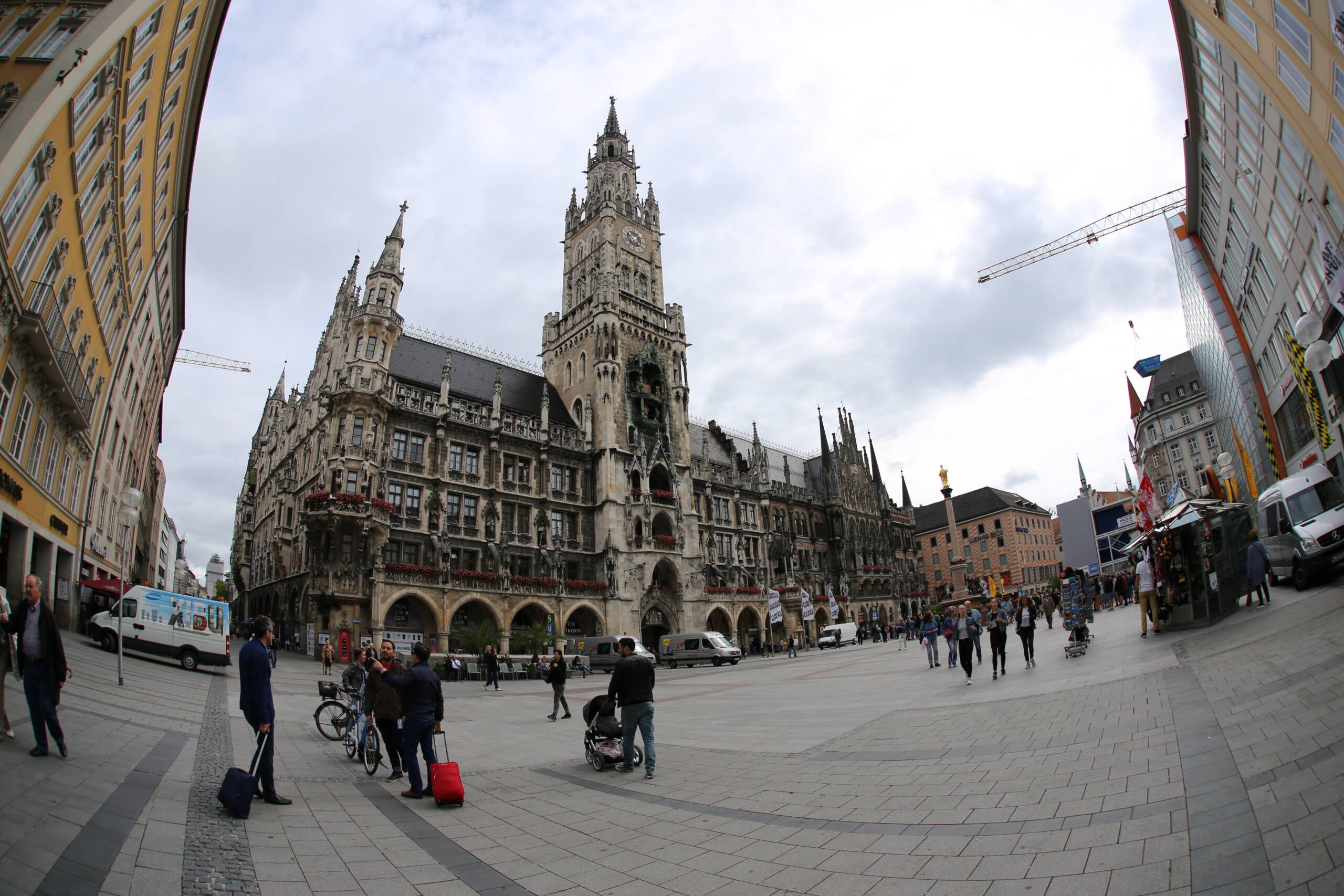
Marienplatz, Munich
The Glockenspiel is a disappointment at any hour and especially at eleven in the morning when everyone has gathered to watch it. Forty-three bells, thirty-two figures, a mechanical performance that lasts ten minutes and communicates nothing. The tourists photograph it anyway. The locals have stopped seeing it.
What is worth seeing is the Viktualienmarkt ten minutes south, which is an actual place where actual people buy actual food. The cheese stall with the Austrian vendor who has strong opinions about which rinds are worth eating. The radishes the size of a fist. The Maß of beer available at the outdoor tables at an hour that would raise eyebrows elsewhere and raises none here.
Munich has made a decision, which is that it will be extremely good at being Munich and uninterested in being anything else. The old center was bombed flat and rebuilt exactly as it was. The decision was criticized at the time as nostalgic reconstruction rather than modern city-building and the criticism was probably correct and also completely irrelevant to whether it was the right decision, which it was. The city knows what it is and has committed to remaining it.
This is not a small thing. Most cities of Munich's size and prosperity have spent the last forty years allowing themselves to be replaced by a generic version of themselves. Munich has not done this. The Viktualienmarkt has been in the same place since 1807.
TravelMktg.com:
- British Airways Marks 90 Years on the Nigeria–UK Route with Flash Sale Fares
- Lyft Expands London Mobility Reach with Gett UK Acquisition
- Hawaiian Airlines Joins oneworld, Opening Hawaiʻi to a Wider Global Network
- Lisbon Vibes: A Day in the City That Built the Modern World
- Alaska in 2026: Five Fresh Reasons the Last Frontier Is Calling Again
- Why World Cup Fans Should Sort Their US SIM Card Before They Land
- Hawaiian Airlines and Alaska Airlines Unite Systems to Deliver a Smoother Global Travel Experience
- Princess Cruises Alaska Drone Show, May 1, 2026, Seattle
- Vibes of Taormina
- AI Heads to the Campground as More Campers Blend Nature With Connectivity